
A B2B travel agent portal is a booking workspace where approved travel agents, sub-agents or corporate bookers search and book travel through your agency. You supply the content and the back office; they bring the customers.
Running a B2B channel well depends less on the search page and more on the controls around it: who can join, how agents pay, what prices they see, and what they are allowed to do with a booking after the sale. This guide covers the features that matter most when you choose or build a portal.
1. Agent Sign-Up and Approval
An open portal invites fraud and price scraping. Every agent account should be reviewed before it can book.
- An application form that collects the business name, contact person, address and any registration or license details you require.
- Email verification during sign-up.
- An approval step in your admin, with the ability to reject or suspend an agent.
- Bot protection on sign-up and login forms.
- A record of who approved each agent and when.
Decide in advance what documents you require and how you will verify them, especially if agents will receive credit.
2. Wallets and Credit
How agents pay is one of the most important design choices in a B2B portal.
- Prepaid wallet: agents top up a balance and bookings are debited from it. This is the lowest-risk option.
- Credit limit: trusted agents can book up to an agreed amount and settle later. This builds loyalty but needs strong credit control.
- Card payment: agents pay per booking by card, which suits occasional users.
Whatever you choose, the wallet should keep a clear ledger of every debit, credit, refund and top-up. A PIN or similar check on wallet payments adds protection if an agent's login is compromised. Refunds on cancelled bookings should return to the wallet automatically according to your rules.
3. Agent Markups and Pricing
Agents need to earn a margin, and you need control over the price they pay.
- Net prices for agents, with your agency's margin built in.
- Separate pricing rules for B2B and B2C, so agent prices do not leak to the public site.
- Rules by route, airline, cabin or agent group where needed.
- The option for agents to add their own markup when they quote a price to their customer.
Our travel agency markup and commission guide explains how to structure these rules.
4. Booking Holds and Ticketing Deadlines
Agents often want to hold a booking while their customer decides. Holds are useful, but they carry risk.
- Allow holds only on fares that clearly state a ticketing deadline.
- Show the deadline to the agent, in a clear time format.
- Release unpaid holds automatically before the airline's deadline, so you are never left with an unticketed booking you are responsible for.
- Limit the number of open holds each agent may have at once, to prevent seat hoarding.
- Make "ticket now" the default, and require the agent to choose a hold explicitly.
5. Booking Ownership
In a portal with many agents, each agent must see only their own bookings.
- Every booking is attributed to the agent who made it.
- Booking lists, details, documents and servicing actions are restricted to that agent.
- Ownership is enforced on the server, not just hidden in the interface.
- Agency staff can see every agent's bookings from the admin.
Without strict ownership, one agent could view or cancel another agent's customer booking, which is a serious privacy and trust problem.
6. Servicing Permissions
Decide what agents can do themselves and what needs your staff.
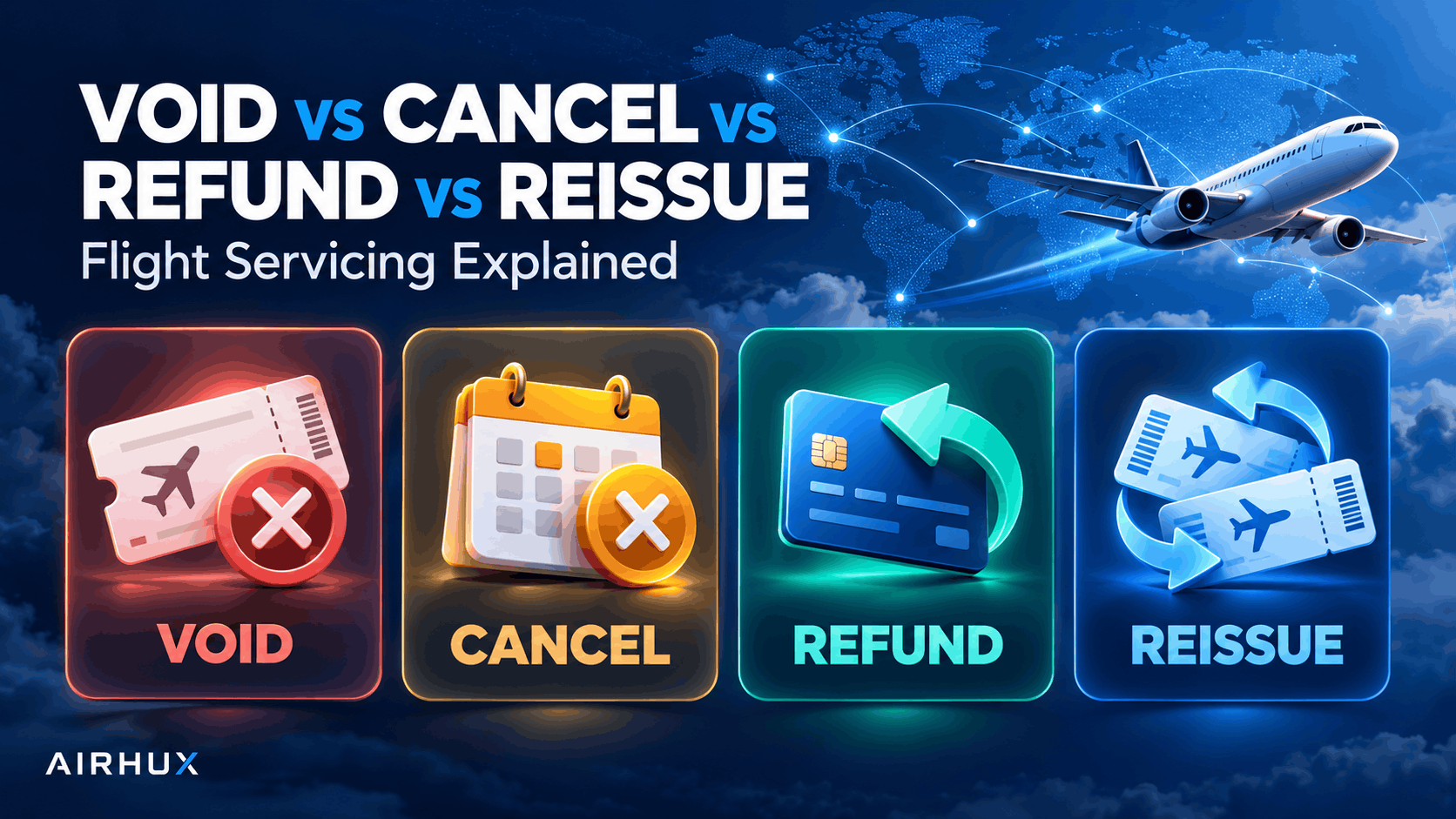
- Void: often allowed for an agent's own booking within the void window.
- Cancel: allowed directly for unticketed bookings; for ticketed bookings, often a request that staff review.
- Refunds: agents may see an estimate, while staff approve and process the final refund.
- Date changes: may be self-service or a request, depending on what the airline and your system support.
Clear permissions protect your agency from costly mistakes and make expectations clear to agents. Requests should land in a staff queue so none are missed.
7. Reports and Statements
Agents and your finance team both need clear numbers.
- Booking reports by date, status and traveler.
- Wallet statements with opening balance, transactions and closing balance.
- Sales and margin reports for your staff, by agent and by period.
- Export to spreadsheet for reconciliation.
Good reporting also helps you manage the channel. Watch which agents book regularly, which ones cancel often, and which routes they sell most. Use that to adjust credit limits, pricing rules and support priorities. Agents who can answer their own balance and booking questions from a statement also contact your team less, which frees staff time for servicing work that genuinely needs a person.
8. Products Beyond Flights
Agents serve customers with more than flights. Offering visas, car rental or airport transfers in the same portal increases the value of each booking and keeps agents working in your system rather than elsewhere. Check that each product follows the same wallet, pricing and ownership rules.
Common Mistakes to Avoid
- Letting agents book before their account is approved.
- Granting credit without limits or review.
- Using the same price rules for B2B and B2C.
- Allowing holds without deadlines or automatic release.
- Enforcing booking ownership only in the interface.
- Giving agents refund powers that should belong to staff.
- Providing no statements, so every balance question becomes a support ticket.
Frequently Asked Questions
What is a B2B travel agent portal?
It is an online booking workspace where approved travel agents search and book travel through a larger agency or supplier. The agency controls content, pricing and payment, and the agent serves their own customers.
Should agents pay by wallet or credit?
A prepaid wallet is the safest starting point. Credit can be offered to trusted agents with a clear limit and settlement terms. Many agencies use both, depending on the agent.
Can agents set their own prices?
Usually, yes. Agents receive a net price and can add their own markup when quoting to their customers. Your agency's margin should already be built into the price the agent pays.
How do I prevent agents from holding seats they never pay for?
Allow holds only on fares with a stated ticketing deadline, release unpaid holds automatically before that deadline, and limit how many open holds each agent may have.
How Airhux Can Help
The Airhux Travel SaaS Platform includes a B2B travel-agent workspace alongside each agency's B2C storefront, both on the agency's own domain and branding. Agencies get flight search and booking with GDS and airline NDC content, visa applications, car rental and airport transfers, agency wallets and markup rules, and an admin to service bookings.
To run a B2B channel under your own brand, become a travel partner. The agent workspace runs on the same domain and branding as your storefront, so your agents always deal with your brand.
- B2B travel agent portal
- B2B travel portal
- travel agent booking portal
- sub agent portal
- B2B flight booking
- travel agent wallet
- agent markup
- B2B travel software